Abstract
Youth entrepreneurship is widely recognized as a key driver of employment creation, poverty reduction, and sustainable economic growth. However, young people in developing countries, including Ethiopia, continue to face substantial barriers to establishing and sustaining business ventures. This study assesses the major challenges and opportunities of youth entrepreneurship in Kellem Wollega Zone, Oromia Regional State, Ethiopia, with particular emphasis on institutional, economic, social, and technological factors. A mixed-methods research approach with an explanatory sequential design was employed. Quantitative data were collected from 399 youth respondents using structured questionnaires, while qualitative data were gathered through semi-structured interviews and focus group discussions. Descriptive statistics and multiple regression analysis were used to analyse quantitative data, and thematic analysis was applied to qualitative responses. The findings reveal that lack of access to finance, poor infrastructure, limited social support, and inadequate entrepreneurial opportunities exert significant negative effects on youth entrepreneurship. Conversely, motivation, access to business assistance services, and technology adoption show positive and statistically significant influences on youth entrepreneurial engagement. The regression model explains 45.8% of the variation in youth entrepreneurship, indicating that both challenges and opportunities jointly play an important role in shaping entrepreneurial outcomes. Although government support, training, and policy frameworks exist, their effects were found to be statistically insignificant, suggesting weaknesses in implementation and coordination. The study concludes that strengthening youth entrepreneurship in Kellem Wollega Zone requires an integrated policy approach that expands access to affordable finance, improves infrastructure, enhances business development services, promotes technology utilization, and fosters supportive social and institutional environments. These findings provide valuable evidence for policymakers, development partners, and educational institutions seeking to design targeted interventions that promote youth-led enterprise development and inclusive economic growth in Ethiopia.
|
Published in
|
Journal of Investment and Management (Volume 15, Issue 2)
|
|
DOI
|
10.11648/j.jim.20261502.11
|
|
Page(s)
|
16-28 |
|
Creative Commons
|

This is an Open Access article, distributed under the terms of the Creative Commons Attribution 4.0 International License (http://creativecommons.org/licenses/by/4.0/), which permits unrestricted use, distribution and reproduction in any medium or format, provided the original work is properly cited.
|
|
Copyright
|
Copyright © The Author(s), 2026. Published by Science Publishing Group
|
Keywords
Youth Entrepreneurship, Challenges, Opportunities, Business Development, Ethiopia
1. Introduction
1.1. Background of the Study
Analyzes the obstacles and prospects for youth entrepreneurship concerning systemic intermediaries and explores the various challenges encountered by young entrepreneurs. An entrepreneur is defined as a person who responds innovatively and is willing to make decisions amid uncertainty
| [31] | Uddin, M. E., et al. (2015). Youth unemployment and global economic challenges. World Economic Review, 7(3), 21–34. |
[31]
.
Youth entrepreneurship plays a crucial role in economic development and job creation, particularly in developing countries where youth unemployment is high
| [1] | African Union Commission. (2015). African youth charter implementation review. African Union. |
[1]
. Several studies have shown that access to finance and institutional support significantly influences the success of small and medium enterprises
| [6] | Fatoki, O., & Garwe, D. (2010). Obstacles to the growth of new SMEs in South Africa: A principal component analysis approach. African Journal of Business Management, 4(5), 729–738. |
[6]
. Sound research design and data collection methods are essential for producing reliable research outcomes
| [7] | Fraenkel, J. R., & Wallen, N. E. (2009). How to design and evaluate research in education (7th ed.). McGraw-Hill. |
[7]
. Youth employment programs are increasingly promoted as strategies to reduce poverty and enhance economic participation
| [9] | International Development Research Centre. (2017). Youth employment and Entrepreneurship in Africa. IDRC. |
[9]
.
Previous studies indicate that structural barriers such as limited capital and weak infrastructure hinder entrepreneurial growth
| [12] | International Labor Organization (ILO). (2015). Global employment trends for youth 2015: Scaling up investments in decent jobs for youth. Geneva, Switzerland: International labor Office. |
[12]
. Research methodology literature highlights the importance of appropriate research design and sampling techniques
| [13] | Kothari, C. R. (2004). Research methodology: Methods and techniques (2nd ed.). New Age International. |
[13]
. Entrepreneurship contributes significantly to innovation and economic competitiveness
| [15] | Levie, J., & Hart, M. (2013). Business and social entrepreneurs in the UK: Entrepreneurship research report. Global Entrepreneurship Monitor. |
[15]
.
Furthermore, the World Employment and Social Outlook report from 2016 indicates that 71 million youth are unemployed in the world. Nearly 90% of youth live in underdeveloped countries. Even so, a majority of these countries are poor and they faced with a lack of quality education, and a high unemployment rate
| [34] | USAID. (2012). Youth in development policy. United States Agency for International Development. |
[34]
. There is no agreement upon definition on the term youth across countries of the world. The UN (United Nations) defines youth as individual aged between 15 to 24 years old. The African Union characterizes youth as individuals aged between 15 and 35 years old. However, various African nations have applied different age brackets to define youth. Considering the age ranges established by different countries and the specific conditions in our nation, the youth policy defines youth as those between the ages of 15 and order to tap into their potential and skills for fostering a democratic system and pursuing development (Ministry of Youth, Sports & Culture of Ethiopia, 2005). Prioritizing the inclusion of young individuals in the workforce and enhancing their conditions in the job market are the key objectives of the Ethiopian government. Young people are vital to the future of any society. They embody the essential shift between childhood and adulthood
| [32] | UNCTAD. (2023). Digital economy report 2023. United Nations. |
[32]
.
The performance of economic enterprises that are owned and operated by youth is crucial for achieving substantial gross domestic product (G. D. P) in numerous countries. Young people are vital to the future of any society. They embody the essential shift between childhood and adulthood. Consequently, many countries are acknowledging the significance of youth in their growth and are developing policies and programs to support them. The inclusion of young people into local, regional, and global markets is essential for economic growth, reducing poverty and inequality, fostering positive youth development, and enhancing the overall welfare of families and communities
| [3] | Chigunta, F. (2002). Youth entrepreneurship: Meeting the key policy challenges, Oxford University Press. |
[3]
.
Ethiopia, the second most populous country in sub-Saharan Africa, with nearly 120 million inhabitants, is following a distinctive growth trajectory due to effective state interventionist strategies. Several policies have been adopted and implemented, yielding positive results. However, it is acknowledged that the fundamental source of all economic value lies in the innovative human intellect, which is uniquely equipped to uncover new scientific principles that lead to the application of technological advancements in various economic production methods. Every individual possesses the innate ability to contribute to the advancement of civilization. Instead of viewing Africa's growing youth population merely as a source for exploitation and low-paying, labor-intensive jobs in the global economy, we should focus on training these young people as skilled workers, engineers, and scientists to enhance their potential contributions to society
| [4] | CMPI Media. (2016). Youth and economic development in Africa: Harnessing innovation and human potential. CMPI Media, Publications. |
[4]
.
In order to ensure that youth programs have a strategic direction of producing innovative citizens who can contribute to the realization of the long-term vision of making Ethiopia a middle-income economy of Oromia in Kellem Wollega zone, the primary motivation behind this research is to examine the opportunities and challenges of youth entrepreneurship and highlight the factors that contribute to its success and failure.
1.2. Statement of the Problem
Youth are extremely difficult, especially in terms of employment and livelihoods, but they are the future of educators and innovators, entrepreneurs and investors, health professionals and scientists, politicians and peacemakers. This makes it even more important to invest in them now so that future generations can survive and thrive, and so that countries that invest in their youth can reap the 'demographic dividend' these youth represents (USAID policy youth, 2012). According to the norms and values of their community, youth development is a comprehensive process of positive change that prepares young people for a bright future
| [19] | Morara, M., & Mureithi, S. (2009). Challenges facing small and medium enterprises in Kenya. KCA Journal of Business Management, 2(1), 16–31. |
[19]
.
National youth policies are essential instruments for supporting youth development and employment opportunities
| [18] | Ministry of Youth, Sports & Culture of Ethiopia. (2005). National youth policy. Addis Ababa, Ethiopia: Government of Ethiopia. |
[18]
.
Youth entrepreneurship is increasingly recognized as a pathway to sustainable economic development. Governments across the world are adopting entrepreneurship promotion policies targeting young people
| [20] | Mulatu, D., & Prasad, R. (2018). Barriers to female entrepreneurship in micro and small enterprises (MSEs) in Ethiopia. Journal of African Business Studies, 14(3), 112–127. |
| [21] | Neumann, T. (2020). Entrepreneurship and youth employment: A pathway to sustainable Development in Sub-Saharan Africa. International Journal of Development Economics, 8(2), 45–60. |
[20, 21]
.
Small business growth is influenced by environmental and institutional conditions. Entrepreneurship education and training have been found to increase entrepreneurial intentions among youth
| [23] | Okpara, J. O. (2011). Factors constraining the growth and survival of SMEs in Nigeria. Management Research Review, 34(2), 156–171. |
| [25] | Schoof, U., & Semali, L. (2008). Youth entrepreneurship: Case studies of good practice. International labor Organization. |
[23, 25]
.
Research methods literature emphasizes the importance of reliability and validity in empirical research. Youth development programs contribute significantly to human capital development
| [26] | Singh, G., & Belwal, R. (2008). Entrepreneurship and small business culture in Ethiopia: A gender perspective. Gender in Management: An International Journal, 23(2), 120–136
https://doi.org/10.1108/17542410810858382 |
| [28] | Stefanović, I., & Stošić, D. (2012). Entrepreneurial intention among youth: The impact of education and environment. Journal of Entrepreneurship Studies, 5(2), 45–58. |
[26, 28]
.
Small business performance depends on management capacity and access to resources. Development agencies emphasize entrepreneurship as a tool for youth employment generation
| [29] | Talent Youth Association (TaYA). (2014). Youth development and employment in Ethiopia. TaYA. |
| [33] | United Nations Development Programme. (2022). Inclusive entrepreneurship for Sustainable development. UNDP. |
[29, 33]
.
Networking and collaboration improve firm performance and business survival. Access to finance remains one of the most significant barriers facing youth entrepreneurs
| [35] | Wallen, N. E., & Fraenkel, J. R. (2009). Educational research: A guide to the process McGraw-Hill. |
| [36] | Watson, J. (2001). Modeling the relationship between networking and firm performance. Journal of Business Venturing, 16(1), 53–75. |
[35, 36]
. Global reports highlight the need for inclusive entrepreneurship policies. Entrepreneurship developments initiatives help improve youth economic participation
| [37] | World Bank. (2023). Youth entrepreneurship and access to finance in developing countries. World Bank Group. |
| [38] | World Employment and Social Outlook. (2016). Trends 2016. International Labor Organization. |
[37, 38]
.
Youth entrepreneurship programs contribute to poverty reduction and sustainable growth
| [39] | Zeru, E., Alemu, T., & Tesfaye, K. (2018). Youth entrepreneurship and employment in Ethiopia: Trends and Prospects. Addis Ababa: Ethiopian Development Research Institute. |
[39]
.
Over the past 20 years, youth development has been seen as a crucial program for creating capable young people who can handle everyday challenges and contribute to their communities. The Ministry of Urban Development and Construction, the Federal Micro and Small Enterprises Development Agency (FeMSEDA), and the United Nations Development Program (UNDP) Ethiopia have launched an entrepreneurship and enterprise development program that encourages the emergence of a strong and competitive private sector in order to realize the vision of Ethiopia's Growth and Transformation Plan and the role that a growing and dynamic private sector can play in its achievement. A semi-autonomous organization will be established by the program to lead the implementation. Furthermore, Ethiopia is currently dealing with Africa's second-largest youth entrepreneur bulge. An estimated 30 million of Ethiopia's 120 million inhabitants are between the ages of 15 and 29
| [43] | United Nations Population Fund (UNFPA). (2023). World population report: Youth population trends. UNFPA. |
[43]
.
Despite this remarkable expansion, inequality has increased significantly and the unemployment rate has remained high, especially among young people. One of the highest rates of unemployment in the area is 19 percent, according to the
| [11] | International Labour Organization. (2022). Global employment trends for youth. ILO. |
[11]
. Even though Ethiopia's economy has grown significantly in recent years, providing good jobs for the increasing number of young Africans is still a difficult development objective. The majority of young people on the continent still make a living through subsistence farming or the urban informal economy. Since they don't make enough money to help themselves and their families escape poverty, the majority of these are working poor. Beyond this overall picture, some of the biggest obstacles to obtaining decent employment are faced by young women in particular. The lack of an entrepreneurial culture is another significant issue facing young people, as evidenced by the low regard for acquiring entrepreneurial skills in formal education and pursuing this career path after graduation. Young women are particularly affected by cultural and societal perceptions of women's roles in business, which impedes their ambitions to start their own businesses. Over the last 25 years, research has demonstrated that entrepreneurship contributes to macroeconomic development. Other studies in Ethiopia have examined the main obstacles faced by female entrepreneurs in MSEs, including age disparities among them
| [22] | OECD. (2022). Entrepreneurship policies for youth. OECD Publishing. |
[22]
.
One potential strategy for reducing poverty and fostering economic growth is to encourage young people to start their own businesses. Nonetheless, the corpus of current knowledge only a few types of research have examined business challenges and their connection to the context of less developed nations. The literature review indicates that the challenges appear to impact entrepreneurial organization's performance outcome; however, these challenges are typically addressed in isolation. Another notable issue is that the business exit is more common during the initial years indicating a logical unit of observation to be young entrepreneurs. But according to the literature review, most studies only took a small number of variables into account, which prevents to them from offering a comprehensive picture of the elements that contribute to youth entrepreneurship
| [14] | Krishnaswamy, K. N., Sivakumar, A. I., & Mathirajan, M. (2012). Management research methodology: Integration of principles, methods, and techniques. Pearson Education. |
[14]
.
Kellem Wollega youth are customarily and culturally encouraged to seek jobs in the public or private sectors. It is now even more difficult for recent graduates are to find work in the public sectors or in well-established private companies. Young people rise of starting their own businesses.
1.3. Research Questions
The following research questions will serve as the study's compass.
1) What are the key critical challenges to youth entrepreneurship in Kellem Wollega Zone?
2) What opportunities are available for youth entrepreneurship development in Kellem Wollega Zone?
3) What are the possible interventions needed to promote youth entrepreneurship in Kellem Wollega Zone?
1.4. Research Objective
1.4.1. General Objective
The overall aim of the study is to assess challenges and opportunities of youth entrepreneurship in Kellem Wollega Zone, Oromia.
1.4.2. Specific Objectives
Specifically the study tries to address the following key research objectives:
1) To identify the key critical challenges to youth entrepreneurship in Kellem Wollega Zone.
2) To assess available opportunities for youth entrepreneurship development in Kellem Wollega Zone.
3) To determine the possible interventions needed to promote youth entrepreneurship in Kellem Wollega Zone.
2. Conceptual Frame Work
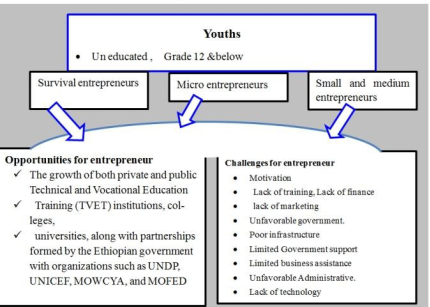
A frame work for challenges (Lack of finance, Government, Poor infrastructure, Unfavorable administrative, Poor management skill, Poor supervision) to youth’s entrepreneurship negative impact on youth’s entrepreneurial entry and success. A Positive contribution to youth’s entrepreneurial entry and success opportunities (Expansion of private and public TVETs, colleges and universities, Establishment of entrepreneurship development center by Ethiopia government, Free market economic system, motivation) for youth entrepreneurship. The relationship between entrepreneurial intention and opportunity identification is shown (
Figure 1).Figure 1. conceptual Frame work
Figure 1. Frame work for challenges and positive Contribution to youth Entrepreneurial opportunities’ (Source(s): (Author’s own work)).
3. Research Methodology
3.1. Description of the Study Area
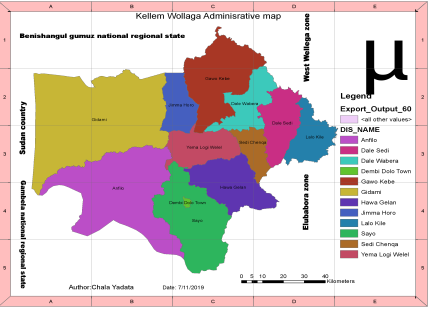
Figure 2. Map of study area (Source: From Wikipedia, the free encyclopedia).
This study was planned to be conducted in the Kellem Wollega Zone, one of the twenty zones in the Oromia Regional State. Most parts of Kellem Wollega lie between 500 and 1,500 meters above sea level. The lowest area is located near the Sudan border, in Gidami District, specifically in a place called Waro Koyan, which lies below 500 meters. The zone consists largely of a low plateau with an undulating landscape shaped by erosion. The elevation of this plateau ranges from 1,500 to 2,000 meters. One of the major lowland areas in the zone is the Baro Lowland, which rises between 1,000 and 1,500 meters and serves as a natural separation between the Kellem Wollega plateau and that of Ilubabor. Additional lowland areas are found along the Sudan border, estimated to be below 500 meters above sea level. Finally, the zone contains a major Miocene shield volcano located at the borders of Jimma Horro, Yemalogi Walel, and Anfilo districts. It’s summarized map of study area (
Figure 2).3.2. Target Population of the Study
The target populations of the study are those who have relation with the youth policy define youth as who are between 15-29 years (Ministry of Youth, Sports & Culture of Ethiopia, 2005). The target group including the youths in development Police the age 15-29 of Kellem Wollega zone youth which found in the Zone. For conveniences of the proposed study, the total population of the 275,000 youth entrepreneurship in Kellem Wollega Zone see (
Table 1), General Youths in Kellem Wollega Zone.
Table 1. General Youths in Zone.
L. No | Name of District | Total numbers of Youth |
Male | Female | Total |
1 | Anfilo | 12,805 | 11,820 | 24,625 |
2 | Dale Sadi | 15,386 | 14,184 | 29,570 |
3 | Dale Wabera | 12,292 | 11,348 | 23,640 |
4 | Gawo Kebe | 14,853 | 13,712 | 28,565 |
5 | Gidami | 15,366 | 14,164 | 29,530 |
6 | Hawa Gelan | 16,390 | 15,130 | 31,520 |
7 | Jima Horo | 10,756 | 9,929 | 20,685 |
8 | Lalo Kile | 11,268 | 10,402 | 21,670 |
9 | Sadi Chenka | 8,195 | 7,565 | 15,760 |
10 | Sayo | 14,341 | 13,239 | 27,580 |
11 | Yemalogi Welel | 8,707 | 8038 | 16,745 |
12 | Dambi Dollo | 2657 | 2453 | 5110 |
| Total | 143,016 | 131,984 | 275,000 |
Source: Kellem Wollega Zone Sport Office. 2025
3.3. Research Design
The research designs that were employed for this study are descriptive and explanatory research designs. Descriptive research design is used by the researchers for describing the real situation or characteristics of the issues of the research
| [14] | Krishnaswamy, K. N., Sivakumar, A. I., & Mathirajan, M. (2012). Management research methodology: Integration of principles, methods, and techniques. Pearson Education. |
[14]
. Hence, this study was us descriptive research design for the fact that the study intended to describe the assessing the challenges and opportunities youth entrepreneurship in the case of Kellem Wollega Zone. The relationship and degree of the relationship between the study variables are explained by the explanatory design
| [16] | Lussier, R. N., & Achua, C. F. (2011). Leadership: Theory, application, & skill development (4th ed.). Cengage Learning. |
[16]
. This study was prefer to use explanatory variable for investigating the relationship between the challenges and opportunities youth entrepreneurship and its determining.
3.4. Research Approach
The purpose of mixed approaches is to combine quantitative and qualitative approaches to better understanding the research issue, Therefore the study was employing a quantitative and qualitative method approach with an explanatory sequential design
| [5] | Creswell, J. W. (2015). A concise introduction to mixed methods research. SAGE Publications. |
[5]
.
3.5. Sample Size
Sample size is determined from the target group 275,000 youth who are involved in study at least once in the past 12 months in study area. The research is conducted with 5 percent marginal error and 95 percent confidence interval and none response rate of 5 percent. This assumption means that the actual sample size for the study is determined using Yemane (1967) formula of sample size determination formula to reach the desired sample size. The sampling procedure is summarized in (
Table 2): The total numbers of youth for each district. This formula is used because it gives the appropriate sample size by clearly estimating the possible variation between projects in the study areas. N/1+N (e2) =275,000/1+275,000(0.05)2 =275000/1+687.5 =275,000/688.5 =399, Therefore sample size 399.
Table 2. Population proportion youth’s.
No | Name of District | Total numbers of Youth | Proportion | Sample Size |
1 | Anfilo | 24,625 | (24,625×399)÷275,000 | 36 |
2 | Dale Sadi | 29,570 | (29,570×399)÷275,000 | 43 |
3 | Dale Wabera | 23,640 | (23,640×399)÷275,000 | 34 |
4 | Gawo Kebe | 28,565 | (28,565×399)÷275,000 | 41 |
5 | Gidami | 29,530 | (29,530×399)÷275,000 | 43 |
6 | Hawa Gelan | 31,520 | (31,520×399)÷275,000 | 46 |
7 | Jima Horo | 20,685 | (20,685×399)÷275,000 | 30 |
8 | Lalo Kile | 21,670 | (21,670×399)÷275,000 | 31 |
9 | Sadi Chenka | 15,760 | (15,760×399)÷275,000 | 23 |
10 | Sayo | 27,580 | (27,580×399)÷275,000 | 40 |
11 | Yemalogi Welel | 16,745 | (16,745×399)÷275,000 | 24 |
12 | Dambi Dollo | 5110 | (5,110×399)÷275,000 | 8 |
| Total | 275,000 | | 399 |
Source: Kellem Wollega zone Agriculture office 2025
3.6. Sampling Procedure
Kellem Wollega Zone was purposively selected for this study because it represents an area with notable challenges and opportunities for youth entrepreneurship. No previous study has been conducted in this specific context, which further justifies the selection. A two-stage sampling technique was employed. In the first stage, the Kellem Wollega Zone was purposively chosen based on its relevance to the study objectives. In the second stage, youth respondents from the zone were selected using a systematic proportionate sampling method. It was assumed that the study population was listed according to different projects. For the systematic sampling process, the sampling interval (I) was determined using the formula:
where I is sample interval, N target population and n is proportional sample size for each project sampled. Accordingly, I
th person from the list was to be sampled as respondent for the study is shown in
Table 2.3.7. Data Source and Type
Both primary and secondary data sources were used in this study. Primary data were collected from youth entrepreneurs through questionnaires, interviews with key informants, and focus group discussions. Secondary data were obtained from organizational documents, unpublished reports, and other relevant materials. The combination of primary and secondary data helped the researcher to comprehensively assess the challenges and opportunities of youth entrepreneurship in the Zone.
3.8. Model Specification
Model is based on two sets of variables: the dependent variable, growth, and the independent variables, marketing, technology, infrastructure, government policy, access to capital, and entrepreneurship. Regression analysis was used in this study with the primary goal of improving the study's ability to describe, comprehend, and forecast the variables that were mentioned. Seven independent variables and one dependent variable were used to create the regression model that follows. Yi = β0 + β1X1 + β2X2 + β3X3 + β4X4 + β5X5 + β6X6 + β7X7+ β8X8 + β9X9 + β10X10 + β11X11+Ui, where Y = Dependent variable – youth entrepreneurship: β0 = Constant term X1 = Entrepreneurial opportunities (expansion of private and public TVETs, colleges and universities, Ethiopian government partnership with UNDP, UNICEF, MOWCYA AND MOFED). X2= motivation X3= lack of finance X4 =government support X5= Poor infrastructure X6=Lack of social support X7= training X8= technology X9=government policy, X10=unfavorable administrative. Ui is an error term or disturbance. These are the coefficients of independent variables: β1, β2, β3, β4, β5, β6, and β7…… β11. Consequently, the following relationships will be explained using this statistical method.
3.9. Validity and Reliability of Data
The measurement model was evaluated using two main criteria: reliability (internal consistency) and validity
| [40] | Hair, J. F., Hult, G. T., Ringle, C. M., & Sarstedt, M. (2017). A primer on partial least squares structural equation modeling (PLS-SEM) (2nd ed.). Sage Publications. |
[40]
. Reliability refers to the extent to which a research instrument produces consistent results across repeated measurements. Validity, on the other hand, indicates the degree to which an instrument accurately measures what it is intended to measure. To assess reliability or internal consistency, the researcher employed Cronbach’s alpha and composite reliability, applying the commonly accepted cutoff value of 0.6 and above
| [30] | Temtime, Z. T., & Pansiri, J. (2004). Small business critical success/failure factors in developing economies: Some evidence from Botswana. American Journal of Applied Sciences, 1(1), 18–25. https://doi.org/10.3844/ajassp.2004.18.25 |
[30]
. For model validation, convergent validity was examined. Convergent validity refers to the extent to which multiple items designed to measure the same construct are in agreement
| [2] | Azizan, N. A., & Mohamed, Z. A. (2013). Structural equation modeling in management Research: An application of partial least squares. International Journal of Business And Social Science, 4(7), 204–210. |
[2]
. It was evaluated through factor loadings, composite reliability, and average variance extracted (AVE). All item loadings exceeded the recommended minimum value of 0.50, indicating acceptable convergent validity
| [10] | International Labour Organization. (2016). World employment and social outlook: Trends For youth 2016. ILO. |
[10]
. Participants were also assured that the information they provided would remain confidential and that the findings would be used solely for academic purposes.
3.10. Ethical Considerations
Ethical standards were strictly followed throughout the research process. Prior to data collection, the researcher obtained permission from the relevant institutional and administrative bodies. All participants were clearly informed about the purpose of the study, the procedures involved, and their right to participate or withdraw at any time without any negative consequences. Participants were assured that the information they provided would remain confidential and would be used solely for academic purposes. To protect privacy, no identifying personal information was recorded, and all responses were kept anonymous. The researcher also ensured that the data were stored securely and accessed only for research analysis. Furthermore, participants were informed that there were no physical, psychological, or social risks associated with their involvement in the study. Their voluntary consent was obtained before administering the questionnaire. Overall, the study adhered to established ethical research principles, including respect for persons, beneficence, and justice.
4. Data Analysis and Interpretation
4.1. Demographic Characteristics of the Respondents
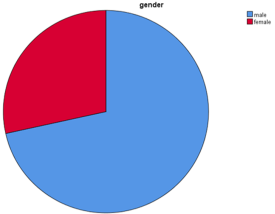
The demographic data for sex shows that out of the 399 respondents 284 respondents are male and 115 respondents are female (see
Figure 3). Figure 3. Pie Chart- Gender respondents, (Source: Author’s work).
4.2. Significance of the Independent Variables as a Whole
Table 3. Explaining Capacity of challenges and opportunities-youth entrepreneurship.
Model Summary |
l | R | R Square | Adjusted R Square | Std. Error of the Estimate | Change Statistics |
F Change | Sig. F Change |
1 | .689a | .474 | .458 | 1.612 | 28.865 | .000 |
a. Predictors: (Constant), technology, motivation, social support, gov’t, finance, gov’t policy, opportunity, infrastructure, business aassistance, training, Administration, market |
Source: SPSS output, 2025
The model indicates that opportunities, limited access to business assistance, lack of technology, unfavorable administrative conditions, limited social support, inadequate infrastructure, insufficient training, restrictive government policies, marketing problems, and financial constraints collectively have a statistically significant effect on youth entrepreneurship. This is supported by the p-value of 0.000, which is less than the accepted alpha level of 0.05. The adjusted R² value is 0.458, meaning that 45.8% of the variation in youth entrepreneurship is explained by the combined effect of the independent variables. This implies that changes in opportunities, access to technology, administrative systems, social support, infrastructure, training, finance, government policy, and marketing conditions account for 45.8% of the change in youth entrepreneurship at a 95% confidence level. Therefore, it can be concluded that the independent variables significantly explain the variance in youth entrepreneurship in the Kellem Wollega Zone.
ANOVA output part I: youth entrepreneurships with the independent Variables
The ANOVA results show that the model is statistically significant. The calculated F-value (28.865) is greater than the critical F-value, and the significance value (p = 0.000) is less than 0.05. This indicates that the overall regression model provides a good fit for the data. A higher F-ratio indicates that the independent variables collectively explain the dependent variable effectively.
Predictor Model and Its Interpretations, Contribution of Each Independent Variable, and Hypotheses Test Results
Predictor Model and its Interpretation a Negative and Significant Predictors the study identified several variables that negatively and significantly affect youth entrepreneurship: Lack of opportunities (β = −0.882, p = 0.000) Poor infrastructure (β = −0.462, p = 0.000) Limited social support (β = −0.626, p = 0.000). This implies that decreases in opportunities, market access, infrastructure, and social support lead to reductions in youth entrepreneurship. Conversely, improvements in these areas encourage youth entrepreneurial activities (see
Table 3).Table 4.
Predictor Model and its Interpretation. Predictor Model and its Interpretation. Predictor Model and its Interpretation. Coefficientsa |
Model | Unstandardized Coefficients | Standardized Coefficients | T | Sig. | 95.0% Confidence Interval for B |
B | Std.Error | Beta | Lower | Upper |
(Constant) | 3.652 | .499 | | 7.320 | .000 | 2.671 | 4.633 |
Motivation | 1.230 | .107 | .482 | 11.520 | .000 | 1.020 | 1.440 |
Opportunity | -.882 | .124 | -.389 | -7.125 | .000 | -1.126 | -.639 |
Gov’t | .033 | .106 | .016 | .308 | .758 | -.176 | .242 |
Finance | .246 | .099 | .133 | 2.490 | .013 | .052 | .440 |
Market | -.199 | .133 | -.092 | -1.493 | .136 | -.461 | .063 |
Infrastructure | -.462 | .114 | -.243 | -4.065 | .000 | -.686 | -.239 |
Training | .096 | .109 | .054 | .882 | .378 | -.118 | .311 |
Gov’t policy | .169 | .110 | .094 | 1.532 | .126 | -.048 | .385 |
Business policy | .611 | .108 | .317 | 5.647 | .000 | .399 | .824 |
Social support | -.626 | .086 | -.351 | -7.283 | .000 | -.795 | -.457 |
Administration | -.135 | .126 | -.065 | -1.073 | .284 | -.382 | .112 |
Technology | .366 | .098 | .192 | 3.740 | .000 | .174 | .559 |
a. Dependent Variable: Youth entrepreneurs. |
Source: SPSS output, 2025
Positive and Significant Predictors
The following variables showed a positive and significant influence: Motivation to start a business (β = 1.230, p = 0.000). Access to finance (β = 0.246, p = 0.013) Business assistance (β = 0.611, p = 0.000) Technology (β = 0.366, p = 0.000). This suggests that increased motivation, enhanced financial access, adequate business support services, and better technological capacity increase youth entrepreneurial activities.
4.3. Hypothesis Testing
1. Motivation and Youth Entrepreneurship: H₀: There is no significant relationship between motivation and youth entrepreneurship. Based on the regression results, the null hypothesis was rejected in favor of the alternative. The findings show that motivation has a positive and significant effect on youth entrepreneurship (p = 0.000; β = 1.230), since the p-value is below the 5% significance level (0.000 < 0.05). Therefore, the study rejects H₀.
2. Opportunities and Youth Entrepreneurship: H₀: There is no significant relationship between opportunities and youth entrepreneurship. The regression results indicate that the null hypothesis is rejected. Lack of opportunities has a negative and significant effect on youth entrepreneurship (p = 0.000; β = –0.882), as the p-value is lower than 0.05. Thus, H₀ is rejected.
3. Government Support and Youth Entrepreneurship: H₀: There is no significant relationship between government support and youth entrepreneurship. The analysis shows no significant effect, as the p-value is greater than 0.05 (p = 0.758; β = 0.033). Therefore, the study fails to reject H₀, indicating that government support does not significantly influence youth entrepreneurship.
4. Access to Finance and Youth Entrepreneurship: H₀: There is no significant relationship between access to finance and youth entrepreneurship. The regression results show that access to finance has a positive and significant effect on youth entrepreneurship (p = 0.013; β = 0.246), since the p-value is less than 0.05. Therefore, H₀ is rejected.
5. Marketing-Related Problems and Youth Entrepreneurship: H₀: There is no significant relationship between marketing-related problems and youth entrepreneurship. The study fails to reject H₀, as the p-value is greater than 0.05 (p = 0.136; β = –0.199). This indicates that marketing-related problems do not significantly affect youth entrepreneurship.
6. Infrastructure and Youth Entrepreneurship: H₀: There is no significant relationship between infrastructure and youth entrepreneurship. Results show that infrastructure-related problems have a negative and significant effect on youth entrepreneurship (p = 0.000; β = –0.462). Because the p-value is below the 5% threshold, the null hypothesis is rejected.
7. Training and Youth Entrepreneurship: H₀: There is no significant relationship between training and youth entrepreneurship. The regression output indicates no significant effect, as the p-value is greater than 0.05 despite a positive coefficient (β = 0.096; p = 0.378) Based on significance rules, the study fails to reject H₀.
8. Government Policies and Youth Entrepreneurship: H₀: There is no significant relationship between government policies and youth entrepreneurship. The study fails to reject the null hypothesis, as the p-value is greater than 0.05 (p = 0.126; β = 0.169). This means government policy-related issues do not significantly influence youth entrepreneurship.
9. Business Assistance and Youth Entrepreneurship: H₀: There is no significant relationship between business assistance and youth entrepreneurship. The null hypothesis is rejected, as business assistance has a positive and significant effect (p = 0.000; β = 0.611). Therefore, H₀ is rejected.
10. Social Support and Youth Entrepreneurship: H₀: There is no significant relationship between social support and youth entrepreneurship. Findings show that social support-related problems have a negative and significant effect on youth entrepreneurship (p = 0.000; β = –0.626). Thus, the study rejects H₀.
11. Administrative Issues and Youth Entrepreneurship: H₀: There is no significant relationship between administrative issues and youth entrepreneurship. Since the p-value is greater than 0.05 (p = 0.284; β = –0.135), the study fails to reject H₀. Administrative issues do not significantly affect youth entrepreneurship.
12. Technology and Youth Entrepreneurship: H₀: There is no significant relationship between opportunities and youth entrepreneurship. The regression results indicate that the null hypothesis is rejected. As technology has a significant positive effect on youth entrepreneurship (p = 0.000; β = 0.366), as the p-value is lower than 0.05. Thus, H₀ is rejected.
Discussion of Findings
Motivation is a critical determinant of entrepreneurial behavior. The results show a strong positive effect of motivation on youth entrepreneurship (p = 0.000, β = 1.230). Highly motivated individuals are more likely to initiate and manage business ventures. This aligns with
| [8] | Hair, J. F., Anderson, R. E., Tatham, R. L., & Black, W. C. (1998). Multivariate data Analysis (5th ed.). Prentice Hall. |
[8]
, who found that motivated entrepreneurs achieve greater success (see
Table 4).
Opportunities is A significant negative effect was observed regarding lack of opportunities (β = −0.882, p = 0.000). Reduced availability of opportunities decreases youth engagement in entrepreneurship. This supports
| [27] | Sekaran, U., & Bougie, R. (2010). Research methods for business: A skill-building Approach (5th ed.). John Wiley & Sons. |
[27]
, who stated that entrepreneurs act upon opportunities rather than waiting for external triggers.
Insufficient finance is a major barrier for youth entrepreneurs. Results show a positive significant relationship between financial access and youth entrepreneurship (β = 0.246, p = 0.013). Similarly emphasize that limited capital and restricted credit access hinder business initiation and growth (see
Table 4).
Infrastructure deficits significantly reduce youth entrepreneurship (β = −0.462, p = 0.000). Adequate infrastructure—such as electricity, water, roads, transport, and telecommunication—is essential for small business performance. but contradicts finding, who found no significant relationshipp (see
Table 4).
Business assistance positively influences youth entrepreneurship (β = 0.611, p = 0.000). Support services, training, mentoring, and advisory platforms help young entrepreneurs overcome early-stage challenges
| [17] | Marilyn, N. J. C., & Jordan, N. (2012). Youth development and empowerment for sustainable futures. New York: Global Youth Press. |
[17]
.
Limited social support negatively affects youth entrepreneurship (β = −0.626, p = 0.000). Adequate social networks, community involvement, and family support enhance business success (see
Table 4).
Technology positively affects youth entrepreneurship (β = 0.366, p = 0.000). Access to modern technology enables youth to innovate, compete, and expand market opportunities. This is consistent with
| [24] | Rahmati, V. (2010). Opportunity recognition and entrepreneurial success. International Journal of Entrepreneurship, 14(1), 45–58. |
[24]
, who found that failure to adopt new technologies leads to higher production costs and business failure (see
Table 4).
Access to modern technology enables youth to innovate, compete, and expand market opportunities, which significantly improves entrepreneurial performance and business sustainability
| [42] | United Nations Population Fund. (2023). |
[42]
.
5. Conclusions and Recommendations
5.1. Conclusions
Based on the general findings, the researcher reached the following conclusions to effectively respond to the research question at hand. The study aimed to pinpoint the primary critical challenges faced by youth entrepreneurs in the Kellem Wollega Zone. Accordingly, the study identified as; a Motivation factors the statements individual behavior is a complex phenomenon, and to secure Income and financial success, to be recognized and get better status. Accordingly, the effects finance access the effect of non-existing problems are greater than the marginal effect of existing problems and shows that adequacy of credit institutions, non-existence of, such as limited finance, shortage of working capital related problems positively contributes to the youth entrepreneurships. Accordingly, the effects business assistance shows that nonexistence such access of business assistance adequate business support services for youth entrepreneurs, exchange of experiences, ideas, forums, and meeting between young entrepreneurs related problems positively contributes to the youths business enterprises. Accordingly the study the effect of a limited social support, identified as, A product/service is not accepted by society and it may be a Gender inequalities and a discrimination by suppliers or customers, Accordingly the study the effect of technology, the sign was the implies shows that non-existence such technology related problems directly contributes to the youth’s business enterprises.
The study's second objective was to evaluate the potential opportunities for developing youth entrepreneurship in the Kellem Wollega Zone. As a result, the research highlighted the lack of expansion of both private and public Technical and Vocational Education and Training (TVET) institutions, colleges, and universities, as well as the absence of partnerships established between the Ethiopian government and organizations like UNDP, UNICEF, MOWCYA, and MOFED.
The study's third objective was to identify potential interventions necessary to encourage youth entrepreneurship in the Zone. In line with the findings, strategies to address the challenges confronting young people are essential, as conventional long-term job opportunities diminish. Youth entrepreneurship offers an alternative avenue for integrating young individuals into the evolving labor markets and enhancing their economic self-sufficiency.
5.2. Recommendation
The primary aim of the research was to evaluate the obstacles and prospects for youth entrepreneurship in Zone and to suggest potential solutions to address these issues. Here are some prevalent infrastructure issues along with their respective suggestions: insufficient resilience: Infrastructure systems are becoming more susceptible to natural disasters (such as floods, earthquakes, and severe weather events), the consequences of climate change, and cyber threats. A deficiency in built-in backup systems and adaptive capability can result in extensive disruptions and economic damage. The following are policy Recommendations for Policymakers.
1. Improve Access to Finance: Establish youth-focused credit schemes with low-interest rates and minimal collateral requirements. Encourage microfinance institutions and commercial banks to create dedicated youth entrepreneurship products. Set up a public–private youth enterprise fund that matches private investment with government guarantees. Empirical basis: Studies show that access to capital is a top barrier for over 60% of young entrepreneurs in developing economies
| [41] | World Bank. (2022). Youth entrepreneurship and access to finance in developing countries. Washington DC: World Bank. |
[41]
.
2. Strengthen Entrepreneurship Education and Skills Training: Integrate entrepreneurship education at all secondary and tertiary education levels, emphasizing practical business creation. Partner with industry to design vocational programs that align with market demands and emerging sectors (e.g., digital economy, green business). Support mentorship and incubation hubs for young founders. Empirical basis: Countries that embed entrepreneurship curricula report a 20–30% increase in youth business start-ups.
3. Simplify Regulatory and Legal Frameworks: Reduce business registration time and fees for youth-led enterprises through digital platforms. Introduce “youth enterprise zones” offering tax incentives and simplified compliance procedures. Establish legal frameworks that protect youth entrepreneurs from exploitation in contracts and partnerships. Empirical basis: The World Bank Doing Business Index shows that reducing registration steps boosts new business creation by up to 25%.
4. Promote Market Access and Digital Inclusion: Develop online marketplaces and export platforms for youth-run businesses. Provide digital literacy training and subsidize access to digital tools and internet services. Support youth participation in government procurement through quota or preference systems. Empirical basis: E-commerce participation has increased SME revenue by 30–50% in digitally connected regions (UNCTAD, 2023).
5. Foster Innovation and Technology Adoption: Establish innovation hubs and research grants specifically targeting youth entrepreneurs in tech, agribusiness, and green sectors. Create incentives for youth-led startups that adopt sustainable or digital technologies. Encourage collaboration between universities and startups for applied research. Empirical basis: Innovation grants improve business survival rates by 40% within the first three years (ILO, 2022).
6. Strengthen Entrepreneurial Ecosystems and Networks: Facilitate youth entrepreneur associations for peer support, advocacy, and shared learning. Develop data systems to monitor youth entrepreneurship trends and outcomes. Empirical basis: Network participation increases business resilience and growth by 35% (Global Entrepreneurship Monitor, 2023).
7. Address Socioeconomic and Cultural Barriers: Promote positive media campaigns showcasing youth entrepreneurial success stories. Encourage gender-inclusive policies to empower young women entrepreneurs. Integrate entrepreneurship support into rural development programs to reach marginalized youth. Empirical basis: Inclusive entrepreneurship policies have doubled female-led business registrations in several African and Asian countries (UNDP, 2022).
Generally: Education & Skills Entrepreneurship in curriculum, mentorship 20–30% increase in youth startups Regulation Simplified registration, youth enterprise zones 25% rise in business creation Market Access Digital markets, procurement inclusion 30–50% revenue growth in connected SMEs Innovation Youth R&D grants, tech hubs 40% higher business survival rate Ecosystem Networking, expos, data systems 35% higher resilience and growth Inclusion Gender and rural inclusion programs 2× increase in female-led startups.
Abbreviations
CSA | Central Statistical Agency |
FDRE | Federal Democratic Republic of Ethiopia |
ILO | International Labour Organization |
GDP | Gross Domestic Product |
MO FED | Ministry of Finance and Economic Development |
MOTI | Ministry of Trade and Industry |
MSEs | Micro and Small Enterprises |
SPSS | Statistical Package for Social Sciences |
SMEs | Small and Medium Enterprises |
UNIDO | United Nations Industrial Development Organizations |
USD | United States Dollar |
WB | World Bank |
WexpY | Work Experience of Youth |
YEdu | Youth Highest Education Level |
Conflicts of Interest
The authors declare no conflicts of interest.
Author Contributions
Hassen Mohammed: Conceptualization, Writing – original draft, Project administration, Methodology, Investigation, Software, Validation
Mahlet Kebede: Supervision, Data curation, Writing – review & editing, Resources, Visualization
Appendix
1) Policy coordination and leadership
a) Have entrepreneurs been identified as a specific target group in the government’s policy?
b) Is there a focal point within government for youth entrepreneurship enterprise development?
c) Is there a strategic framework for the development of the youth entrepreneurship sector, including provision for both start-up and growth of their enterprises?
d) Are regular meetings of partner organizations (e.g., government, NGOs, donors, providers, and lenders) convened to share good practices, review progress, and identify areas for coordinated action?
e) Are the views of youth entrepreneurs’ activity sought regarding the development of MSE policies in the country?
2) Promotion of youth as entrepreneurs
a) Is there broad-based public awareness of and support for the role of youth entrepreneurs in the economy?
b) Is entrepreneurship considered a feasible, viable and attractive option among youth?
c) Are there initiatives in place to recognize and celebrate the achievements of youth entrepreneurs?
d) Is the media used to stimulate interest in entrepreneurship and to promote the activities of youth entrepreneurs?
3) Access to financing
a) Do youth have access to sources of financing for the start-up of new enterprises?
b) Do special financing programmers exist to help overcome the barriers youth face in accessing credit (e.g., lack of collateral)?
c) Are youth able to access business financing as “individual” entrepreneurs, and not just on a peer, mutual-guarantee lending basis?
d) Are youth able to access financing beyond the micro-finance lending limit?
e) Are there multiple sources and types of financing available to meet the needs of youth enterprises at each of the stages of growth and development?
f) Is financing equally available in rural and urban areas?
g) Are efforts made to ensure youth have access to information about the available sources and types financing and the criteria used to make lending decisions?
References
| [1] |
African Union Commission. (2015). African youth charter implementation review. African Union.
|
| [2] |
Azizan, N. A., & Mohamed, Z. A. (2013). Structural equation modeling in management Research: An application of partial least squares. International Journal of Business And Social Science, 4(7), 204–210.
|
| [3] |
Chigunta, F. (2002). Youth entrepreneurship: Meeting the key policy challenges, Oxford University Press.
|
| [4] |
CMPI Media. (2016). Youth and economic development in Africa: Harnessing innovation and human potential. CMPI Media, Publications.
|
| [5] |
Creswell, J. W. (2015). A concise introduction to mixed methods research. SAGE Publications.
|
| [6] |
Fatoki, O., & Garwe, D. (2010). Obstacles to the growth of new SMEs in South Africa: A principal component analysis approach. African Journal of Business Management, 4(5), 729–738.
|
| [7] |
Fraenkel, J. R., & Wallen, N. E. (2009). How to design and evaluate research in education (7th ed.). McGraw-Hill.
|
| [8] |
Hair, J. F., Anderson, R. E., Tatham, R. L., & Black, W. C. (1998). Multivariate data Analysis (5th ed.). Prentice Hall.
|
| [9] |
International Development Research Centre. (2017). Youth employment and Entrepreneurship in Africa. IDRC.
|
| [10] |
International Labour Organization. (2016). World employment and social outlook: Trends For youth 2016. ILO.
|
| [11] |
International Labour Organization. (2022). Global employment trends for youth. ILO.
|
| [12] |
International Labor Organization (ILO). (2015). Global employment trends for youth 2015: Scaling up investments in decent jobs for youth. Geneva, Switzerland: International labor Office.
|
| [13] |
Kothari, C. R. (2004). Research methodology: Methods and techniques (2nd ed.). New Age International.
|
| [14] |
Krishnaswamy, K. N., Sivakumar, A. I., & Mathirajan, M. (2012). Management research methodology: Integration of principles, methods, and techniques. Pearson Education.
|
| [15] |
Levie, J., & Hart, M. (2013). Business and social entrepreneurs in the UK: Entrepreneurship research report. Global Entrepreneurship Monitor.
|
| [16] |
Lussier, R. N., & Achua, C. F. (2011). Leadership: Theory, application, & skill development (4th ed.). Cengage Learning.
|
| [17] |
Marilyn, N. J. C., & Jordan, N. (2012). Youth development and empowerment for sustainable futures. New York: Global Youth Press.
|
| [18] |
Ministry of Youth, Sports & Culture of Ethiopia. (2005). National youth policy. Addis Ababa, Ethiopia: Government of Ethiopia.
|
| [19] |
Morara, M., & Mureithi, S. (2009). Challenges facing small and medium enterprises in Kenya. KCA Journal of Business Management, 2(1), 16–31.
|
| [20] |
Mulatu, D., & Prasad, R. (2018). Barriers to female entrepreneurship in micro and small enterprises (MSEs) in Ethiopia. Journal of African Business Studies, 14(3), 112–127.
|
| [21] |
Neumann, T. (2020). Entrepreneurship and youth employment: A pathway to sustainable Development in Sub-Saharan Africa. International Journal of Development Economics, 8(2), 45–60.
|
| [22] |
OECD. (2022). Entrepreneurship policies for youth. OECD Publishing.
|
| [23] |
Okpara, J. O. (2011). Factors constraining the growth and survival of SMEs in Nigeria. Management Research Review, 34(2), 156–171.
|
| [24] |
Rahmati, V. (2010). Opportunity recognition and entrepreneurial success. International Journal of Entrepreneurship, 14(1), 45–58.
|
| [25] |
Schoof, U., & Semali, L. (2008). Youth entrepreneurship: Case studies of good practice. International labor Organization.
|
| [26] |
Singh, G., & Belwal, R. (2008). Entrepreneurship and small business culture in Ethiopia: A gender perspective. Gender in Management: An International Journal, 23(2), 120–136
https://doi.org/10.1108/17542410810858382
|
| [27] |
Sekaran, U., & Bougie, R. (2010). Research methods for business: A skill-building Approach (5th ed.). John Wiley & Sons.
|
| [28] |
Stefanović, I., & Stošić, D. (2012). Entrepreneurial intention among youth: The impact of education and environment. Journal of Entrepreneurship Studies, 5(2), 45–58.
|
| [29] |
Talent Youth Association (TaYA). (2014). Youth development and employment in Ethiopia. TaYA.
|
| [30] |
Temtime, Z. T., & Pansiri, J. (2004). Small business critical success/failure factors in developing economies: Some evidence from Botswana. American Journal of Applied Sciences, 1(1), 18–25.
https://doi.org/10.3844/ajassp.2004.18.25
|
| [31] |
Uddin, M. E., et al. (2015). Youth unemployment and global economic challenges. World Economic Review, 7(3), 21–34.
|
| [32] |
UNCTAD. (2023). Digital economy report 2023. United Nations.
|
| [33] |
United Nations Development Programme. (2022). Inclusive entrepreneurship for Sustainable development. UNDP.
|
| [34] |
USAID. (2012). Youth in development policy. United States Agency for International Development.
|
| [35] |
Wallen, N. E., & Fraenkel, J. R. (2009). Educational research: A guide to the process McGraw-Hill.
|
| [36] |
Watson, J. (2001). Modeling the relationship between networking and firm performance. Journal of Business Venturing, 16(1), 53–75.
|
| [37] |
World Bank. (2023). Youth entrepreneurship and access to finance in developing countries. World Bank Group.
|
| [38] |
World Employment and Social Outlook. (2016). Trends 2016. International Labor Organization.
|
| [39] |
Zeru, E., Alemu, T., & Tesfaye, K. (2018). Youth entrepreneurship and employment in Ethiopia: Trends and Prospects. Addis Ababa: Ethiopian Development Research Institute.
|
| [40] |
Hair, J. F., Hult, G. T., Ringle, C. M., & Sarstedt, M. (2017). A primer on partial least squares structural equation modeling (PLS-SEM) (2nd ed.). Sage Publications.
|
| [41] |
World Bank. (2022). Youth entrepreneurship and access to finance in developing countries. Washington DC: World Bank.
|
| [42] |
United Nations Population Fund. (2023).
|
| [43] |
United Nations Population Fund (UNFPA). (2023). World population report: Youth population trends. UNFPA.
|
Cite This Article
-
APA Style
Mohammed, H., Kebede, M. (2026). Exploring Challenges, Opportunities, and Policy Implications for Youth Entrepreneurship in Kellem Wollega, Ethiopia. Journal of Investment and Management, 15(2), 16-28. https://doi.org/10.11648/j.jim.20261502.11
 Copy
|
Copy
|
 Download
ACS Style
Mohammed, H.; Kebede, M. Exploring Challenges, Opportunities, and Policy Implications for Youth Entrepreneurship in Kellem Wollega, Ethiopia. J. Invest. Manag. 2026, 15(2), 16-28. doi: 10.11648/j.jim.20261502.11
Copy
|
Download
AMA Style
Mohammed H, Kebede M. Exploring Challenges, Opportunities, and Policy Implications for Youth Entrepreneurship in Kellem Wollega, Ethiopia. J Invest Manag. 2026;15(2):16-28. doi: 10.11648/j.jim.20261502.11
Copy
|
Download
-
@article{10.11648/j.jim.20261502.11,
  author = {Hassen Mohammed and Mahlet Kebede},
  title = {Exploring Challenges, Opportunities, and Policy Implications for Youth Entrepreneurship in Kellem Wollega, Ethiopia},
  journal = {Journal of Investment and Management},
  volume = {15},
  number = {2},
  pages = {16-28},
  doi = {10.11648/j.jim.20261502.11},
  url = {https://doi.org/10.11648/j.jim.20261502.11},
  eprint = {https://article.sciencepublishinggroup.com/pdf/10.11648.j.jim.20261502.11},
  abstract = {Youth entrepreneurship is widely recognized as a key driver of employment creation, poverty reduction, and sustainable economic growth. However, young people in developing countries, including Ethiopia, continue to face substantial barriers to establishing and sustaining business ventures. This study assesses the major challenges and opportunities of youth entrepreneurship in Kellem Wollega Zone, Oromia Regional State, Ethiopia, with particular emphasis on institutional, economic, social, and technological factors. A mixed-methods research approach with an explanatory sequential design was employed. Quantitative data were collected from 399 youth respondents using structured questionnaires, while qualitative data were gathered through semi-structured interviews and focus group discussions. Descriptive statistics and multiple regression analysis were used to analyse quantitative data, and thematic analysis was applied to qualitative responses. The findings reveal that lack of access to finance, poor infrastructure, limited social support, and inadequate entrepreneurial opportunities exert significant negative effects on youth entrepreneurship. Conversely, motivation, access to business assistance services, and technology adoption show positive and statistically significant influences on youth entrepreneurial engagement. The regression model explains 45.8% of the variation in youth entrepreneurship, indicating that both challenges and opportunities jointly play an important role in shaping entrepreneurial outcomes. Although government support, training, and policy frameworks exist, their effects were found to be statistically insignificant, suggesting weaknesses in implementation and coordination. The study concludes that strengthening youth entrepreneurship in Kellem Wollega Zone requires an integrated policy approach that expands access to affordable finance, improves infrastructure, enhances business development services, promotes technology utilization, and fosters supportive social and institutional environments. These findings provide valuable evidence for policymakers, development partners, and educational institutions seeking to design targeted interventions that promote youth-led enterprise development and inclusive economic growth in Ethiopia.},
 year = {2026}
}
Copy
|
Download
-
TY  - JOUR
T1  - Exploring Challenges, Opportunities, and Policy Implications for Youth Entrepreneurship in Kellem Wollega, Ethiopia
AU  - Hassen Mohammed
AU  - Mahlet Kebede
Y1  - 2026/06/12
PY  - 2026
N1  - https://doi.org/10.11648/j.jim.20261502.11
DO  - 10.11648/j.jim.20261502.11
T2  - Journal of Investment and Management
JF  - Journal of Investment and Management
JO  - Journal of Investment and Management
SP  - 16
EP  - 28
PB  - Science Publishing Group
SN  - 2328-7721
UR  - https://doi.org/10.11648/j.jim.20261502.11
AB  - Youth entrepreneurship is widely recognized as a key driver of employment creation, poverty reduction, and sustainable economic growth. However, young people in developing countries, including Ethiopia, continue to face substantial barriers to establishing and sustaining business ventures. This study assesses the major challenges and opportunities of youth entrepreneurship in Kellem Wollega Zone, Oromia Regional State, Ethiopia, with particular emphasis on institutional, economic, social, and technological factors. A mixed-methods research approach with an explanatory sequential design was employed. Quantitative data were collected from 399 youth respondents using structured questionnaires, while qualitative data were gathered through semi-structured interviews and focus group discussions. Descriptive statistics and multiple regression analysis were used to analyse quantitative data, and thematic analysis was applied to qualitative responses. The findings reveal that lack of access to finance, poor infrastructure, limited social support, and inadequate entrepreneurial opportunities exert significant negative effects on youth entrepreneurship. Conversely, motivation, access to business assistance services, and technology adoption show positive and statistically significant influences on youth entrepreneurial engagement. The regression model explains 45.8% of the variation in youth entrepreneurship, indicating that both challenges and opportunities jointly play an important role in shaping entrepreneurial outcomes. Although government support, training, and policy frameworks exist, their effects were found to be statistically insignificant, suggesting weaknesses in implementation and coordination. The study concludes that strengthening youth entrepreneurship in Kellem Wollega Zone requires an integrated policy approach that expands access to affordable finance, improves infrastructure, enhances business development services, promotes technology utilization, and fosters supportive social and institutional environments. These findings provide valuable evidence for policymakers, development partners, and educational institutions seeking to design targeted interventions that promote youth-led enterprise development and inclusive economic growth in Ethiopia.
VL  - 15
IS  - 2
ER  -
Copy
|
Download




 Share This Article
 Twitter
 Linked In
 Facebook